Audina Font: A Stylish Script Handwritten Typeface for Digital Brands
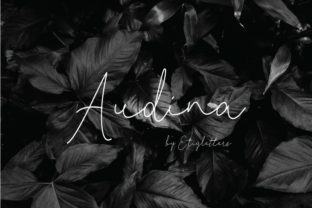
I was finalizing the hero section of a new coaching website last week—soft pastel background, minimalist layout, and a headline that needed to feel warm but intentional. I tried three sans serifs first. Clean? Yes. Human? Not quite. Then I dropped in Audina, and everything clicked. That’s the thing about Audina: it’s not just another script font—it’s a Script Handwritten typeface with rhythm, breath, and quiet confidence. It doesn’t shout. It leans in.
Audina for Hero Headlines and Landing Page Titles
For the coaching site, I used Audina only on the main headline (“You Already Have What It Takes”)—no subhead, no buttons, no secondary text. Just one line, sized at 48px on desktop and 36px on mobile, tracking slightly looser for air. Why? Because Audina is a display font built for impact, not endurance. It thrives where attention begins—not where users scroll or read long paragraphs. On landing pages, that means hero titles, value proposition headers, and campaign taglines. I tested it over a light image overlay (5% black tint), and its contrast held beautifully—even at smaller breakpoints. No stroke, no shadow needed. Just clean, confident Script Handwritten presence.
Audina for Boutique Online Store Banners and Product Launch Graphics
Last month, I helped refresh the seasonal banner for a small ceramic studio’s Shopify store. Their brand voice is gentle, tactile, and intentionally unhurried. We’d been using a generic brush script that felt dated—too jagged, too busy. Swapping in Audina gave the “Spring Collection Is Here” banner immediate warmth and cohesion. Its lowercase ‘a’ and ‘g’ have subtle ball terminals; the ‘s’ flows without sharp angles. As a Fonts choice for e-commerce banners, Audina works best at medium sizes (32–40px) on light or neutral backgrounds. Avoid pairing it with overly geometric sans serifs—instead, try it with a soft, open-weight sans like Poppins Light or Inter Variable for body copy. That contrast keeps hierarchy clear without sacrificing personality.
Audina for Creative Portfolios and Designer Brand Kits
I’m currently building a digital brand kit for a freelance illustrator—and Audina became the anchor for her logo lockup, social media banners, and downloadable press assets. Her work is delicate, expressive, and emotionally grounded. Audina mirrors that tone without competing. It’s not overly ornate or retro; it’s modern Script Handwritten with just enough variation in stroke weight to feel handmade, but consistent enough to scale across devices. In Figma, I checked its rendering at 24px on dark mode (using a #1a1a1a background)—still legible, still graceful. Pro tip: use Audina only for short, high-value phrases in portfolios—project titles, “About Me” headers, signature lines—not paragraph text or navigation labels.
Audina for Course Sales Pages and Email Campaign Headers
When designing a course sales page for a mindful writing workshop, I needed typography that signaled both creativity and credibility. Audina handled the “Enroll Now” CTA button (in all-caps, 20px, letter-spaced +1px) while a clean sans serif carried the bullet points and testimonials. The result? A visual pause—a moment of intention before the user scrolls deeper. As Fonts go, Audina excels in emotional punctuation: headlines, section dividers, quote callouts, and email subject line previews. But don’t force it into tight spaces. On mobile, avoid using Audina under 22px—or below 18px if it’s over a busy background. Always test loading performance: make sure the webfont file is served as WOFF2 and preloaded in your .
Audina for Blog Headers and Editorial-Style Digital Content
I recently redesigned a slow-growing wellness blog focused on sustainable living. The old header font felt corporate and distant. With Audina, we added humanity back in—without losing polish. Used only on post titles (H1s), not category tags or author bylines, it created instant tonal alignment. Readers told us the site now “feels like a conversation.” That’s the power of choosing the right Script Handwritten font: it shapes perception before a single word is read. For editorial layouts, pair Audina with a highly readable serif (like Literata or Cormorant Garamond) for body text—especially if you publish long-form guides or personal essays. Avoid pairing it with other scripts or decorative fonts. One expressive voice is enough.
Audina for Social Media Graphics and Branded Web Content
In Canva and Figma, Audina holds up remarkably well in exported PNGs and SVGs—no pixelation, no inconsistent kerning. I used it for Instagram story highlights (“Stories”, “Tips”, “Live”), where its natural flow mimics hand-drawn labels without looking amateurish. As Fonts go, Audina includes standard OpenType features (ligatures, stylistic alternates), which helps avoid awkward letter collisions—especially in words like “love”, “create”, or “you”. Before deploying it across a brand’s digital ecosystem, I always check: Does it support accented characters? Yes—basic Latin-1 and extended Latin. Is it licensed for commercial web use? Yes, with full WOFF/WOFF2 webfont access included. That matters when you’re shipping client sites or launching SaaS dashboards with branded UI elements.
Audina for Logo Design and Signature Accents
One last real-world note: I used Audina to redraw a client’s handwritten signature as a vector logo lockup. Its natural exit strokes and organic baseline made tracing intuitive—and the final SVG scaled flawlessly from favicon to billboard mockup. For logo design, Audina isn’t meant to replace custom lettering—but it *is* a premium, production-ready alternative when time, budget, or consistency are constraints. Just remember: keep it simple. One word. One line. Let the Script Handwritten quality do the talking.